

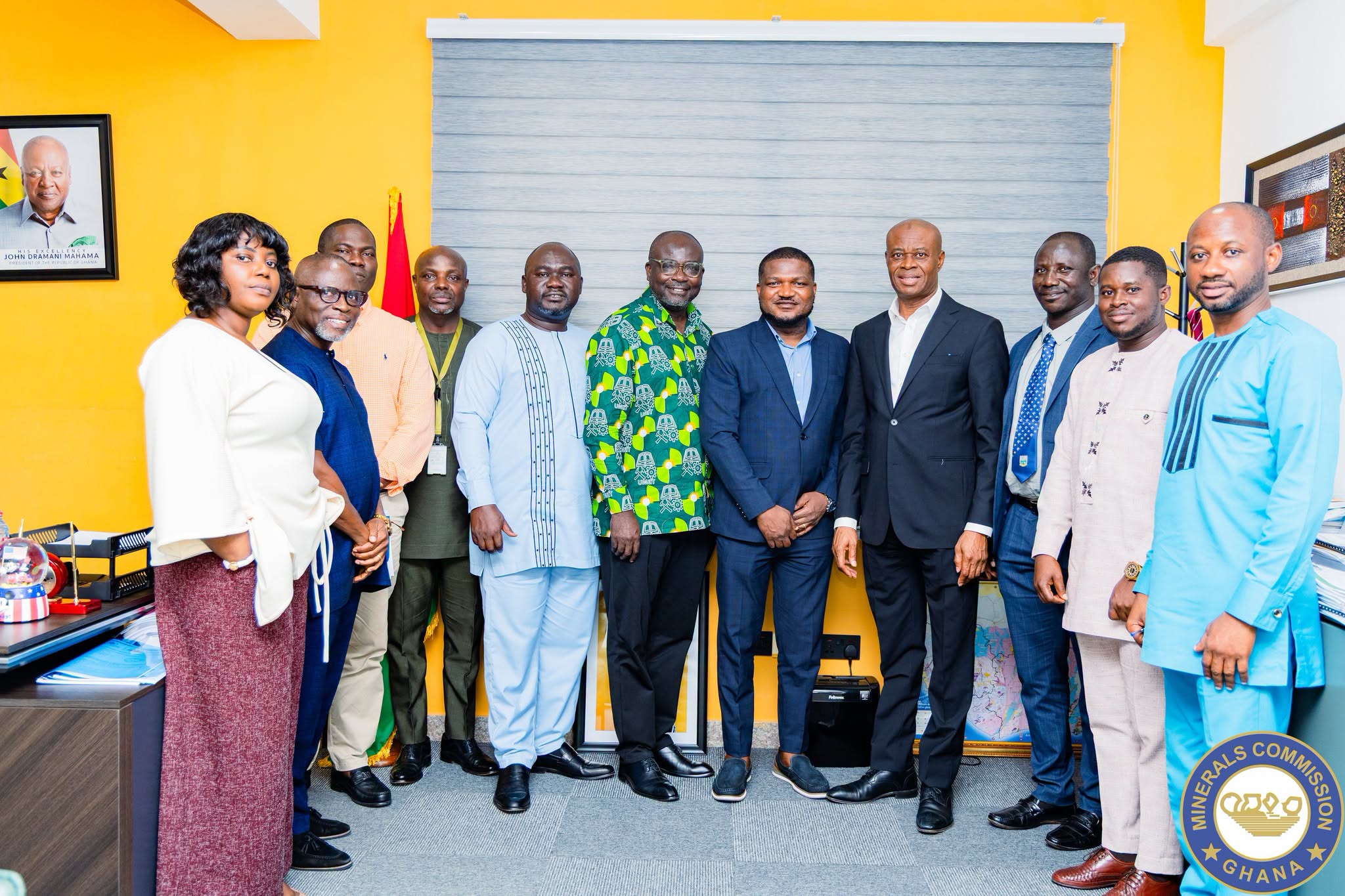
The University of Mines and Technology (UMaT) has proposed a new framework that would require small-scale mining operators in Ghana to engage trained professionals as part of the licensing or licence-renewal process.
Vice-Chancellor of UMaT, Professor Bernard Kumi-Boateng, said the proposal would help improve technical standards, promote responsible mining and strengthen accountability in the small-scale mining sector.
He made the proposal when he led a delegation from UMaT to the Minerals Commission for discussions on strengthening collaboration between academia and the mining industry.
Prof. Kumi-Boateng said UMaT could support the sector by providing suitably trained graduates, while Minerals Commission-licensed professionals could provide the technical expertise needed to improve mining operations.
According to him, requiring small-scale mining operators to engage qualified professionals could help reduce unsafe and environmentally harmful mining practices.
He said the initiative could also create employment opportunities for mining graduates while ensuring that operators have access to the technical expertise required to comply with mining and environmental regulations.
The proposal comes amid growing efforts to improve standards in Ghana’s small-scale mining sector and address challenges associated with irresponsible mining.
Prof. Kumi-Boateng also proposed collaboration between UMaT and the Minerals Commission on research and technical assignments, including environmental and operational impact assessments and resettlement planning.
He further called for professional certification programmes for non-technical mining professionals to improve their skills and career prospects.
The Vice-Chancellor said UMaT was also considering a mandatory Postgraduate Diploma in Sustainable Mining for its students as part of efforts to promote responsible mining practices among future professionals.
Minerals Commission
The Chief Executive Officer of the Minerals Commission, Isaac Andrews Tandoh, welcomed the proposal, particularly the introduction of trained personnel and professional certification into small-scale mining.
Mr. Tandoh said establishing clear professional standards would strengthen accountability in the sector.
He said professionals responsible for mining operations should be held accountable when operators breach mining and environmental requirements.
Mr. Tandoh also stressed the importance of closer cooperation between the Commission and UMaT in developing practical solutions to challenges facing Ghana’s mining industry.
He said the Commission was prepared to support relevant research initiatives by UMaT, particularly research that responds to national priorities.
The Deputy Minister for Lands and Natural Resources, Dr. Yusif Sulemana, who attended the meeting, urged UMaT and the Minerals Commission to move quickly from discussions to implementation.
He pledged the Ministry’s support for efforts to translate the proposals into practical initiatives that could improve Ghana’s mining sector.
The meeting also explored collaboration in research, capacity building, environmental sustainability and the development of skilled professionals for the mining industry.
The proposed professional requirement for small-scale mining operations is expected to form part of broader efforts to promote responsible mining and ensure the sustainable use of Ghana’s mineral resources.
Source: myinfotoday.com
